Frequently Asked Questions
-
Can I rent a home at River Trail Commons instead of buying a home?
No, we do not have units available to rent. River Trail Commons offers private homes for sale. Residents own their individual homes and also have ownership in shared spaces in the community. This means residents have shared stake in this cohousing community and its development.
-
How much do the homes cost?
Home prices start at $325,000. See the Individual Homes page for a breakdown of estimated pricing per unit.
-
How do the discounted homes work and who is eligible?
Milwaukee holds the record for the largest racial gap in family wealth from home equity. Many of us got a college opportunity because our parents owned a home. Many were denied such opportunities due to illegally enforced racially restrictive deeds and subsequent red lining in Milwaukee.
We currently have $1 million donated to reduce home pricing for First Generation Milwaukee-born buyers by 29% for 10 homes. These houses will be deed restricted to require a resale to another First-Generation buyer and at the same value ratio (e.g. if a $300,000 home was purchased at $200,000 due to the discount, then if the value appreciated to $600,000, the sale could not exceed $400,000.
We would like to extend this discount to 10 more, or half of our homes, should we be able to obtain additional donations. PLEASE inquire if you are interested in a discounted home.
-
Are pets allowed?
Absolutely. Pets are part of our families. We live on a park and on hiking trails, so we have a perfect location for pets. Like any community, we will need to assure our pets do not bother our neighbors.
-
We have a shared kitchen, but do we have our own kitchen in our own home as well?
Yes! Every private home is completely outfitted with a full kitchen and appliances.
-
How is home ownership legally structured?
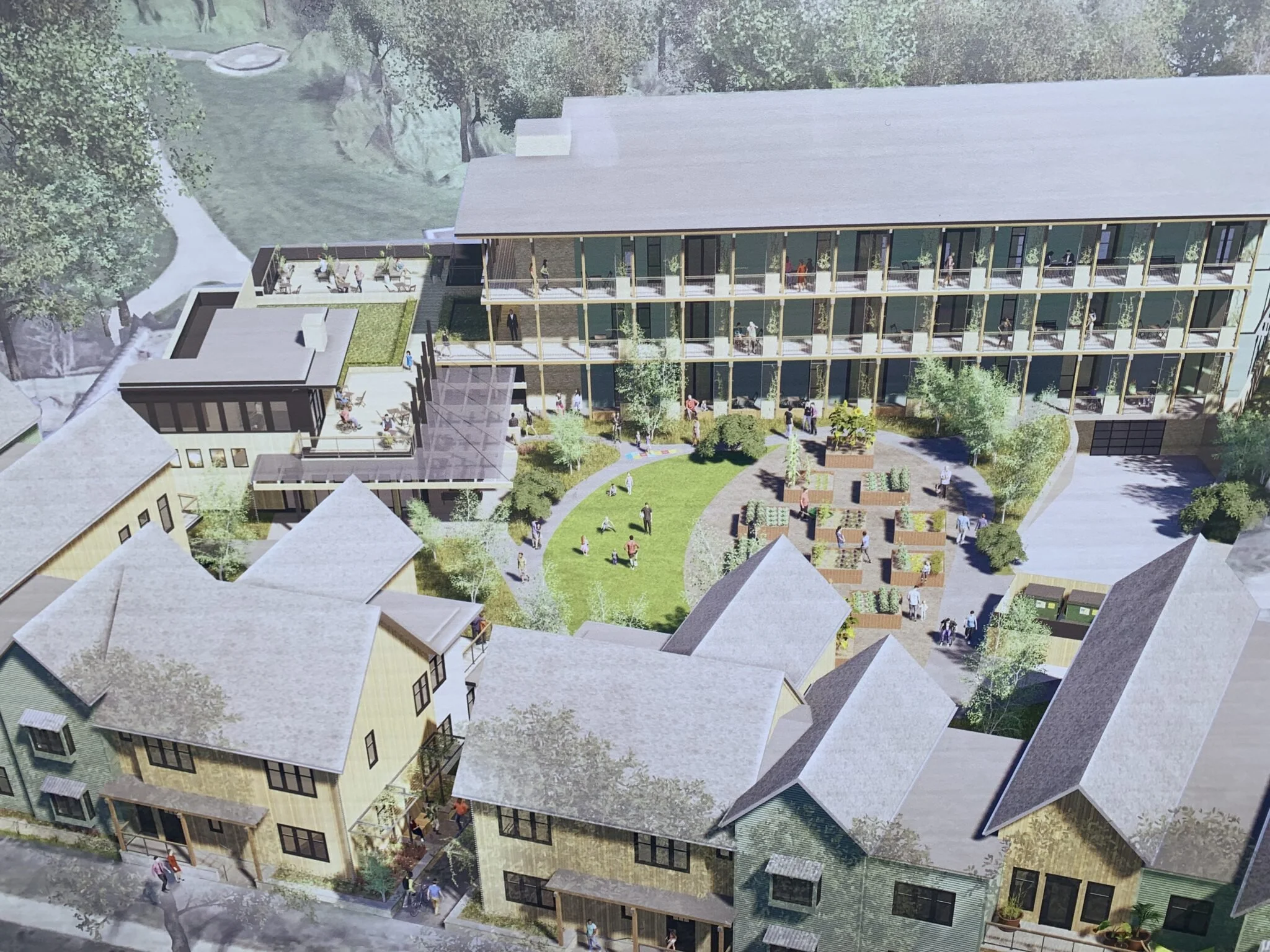
River Trail Commons Cohousing is legally structured as condominiums because we own our private homes individually and we also own the Common House and other facilities in common, as extensions of our private homes.
-
Does cohousing offer good value?
Cohousing typically costs more per square foot in terms of private home space. However, it can offer better value than other homes for several reasons:
- Cohousing offers common facilities not available with other housing. These spaces act as extensions of our private homes, effectively expanding the square footage we are buying.
- Cohousing is often located in exciting, inclusive, walkable neighborhoods, like our location in Riverwest. Our site on the park, forest, bike paths and river is a premier site, so the land and demolition were expensive. But we also are adjacent to play fields, a playground with a water feature, and picnic areas. This proximity reduces our transportation expenses and frees up our travel time.
- New construction and sustainability features cost more initially but save money over time by reducing energy and repair costs.
- Our in-community events, screen room, and play area, as well as occasional shared errands and pet, child, and senior care reduce our daily living expenses. This frees up more money for mortgages.
- Our organic garden and community meals reduce our food costs.
- Our children’s play area and teen area reduce transportation costs for play dates, gaming nights, and the like.
-
What about safety?
Cohousing communities tend to be safer than other housing, because our homes are oriented around our Commons. Part of cohousing is forging a community that looks out for YOU.
While no one is obligated to another, sharing rides, cooperating on pet, child, and senior care, and so on, makes us all feel a bit more secure in our lives.
When visiting another cohousing community, we saw a young child poke her head into the Common House and ask the person we were talking to, “Will you be my adult?” The response was a resounding, “Yes” and the child then entered the Common House. Such tiny measures make our community feel safe and secure, as well as warm and homey.
-
Will I have to attend meetings?
You can be involved as much or as little as you like. We follow a modified Sociocracy system, which delegates scope of work and budgets to Circles, reducing the need for general, long, or frequent meetings.
-
Do I have to share communal cooking responsibilities?
To some extent, yes, but we get back much more than we give. With 40 homes, each household will only need to have cooking responsibility every 40 weeks! Likewise, many cohousing communities have two workdays per year, with all of us reaping the benefits from landscaping, painting, etc. as needed.
-
How do personal relationships differ in cohousing from those in a typical subdivision or condo building?
We’ve all read that loneliness is worse for health than smoking. How often have we heard of households that downsize to a condo downtown or move out to a rural area: just to find that a year later, they really don’t talk to their neighbors, let alone relax or go on outings with them?
Cohousing is designed for social interaction to draw us into the Common House, while allowing plenty of privacy in our private homes. Many residents will spend evening time together in the lounge, or go on a bike ride together, or watch each other’s children. We believe this makes us all healthier, happier, and more resilient.
-
What if I need to sell my home?
Experience shows that cohousing condominium homes appreciate in value and generally have waiting lists for any available resale units. River Trail Commons Cohousing is still developing its Rules to Live By, but cohousing communities usually require subsequent prospective buyers to stay in a Guest Room, attend a Member Meeting, and share a Community Meal to ensure the new buyer is a good fit. But generally, it’s your home and you can sell it as you like.
-
What about parking?
Underground parking is available for deeded purchase by 21 households. Guest parking is also available. Residents have frontage space to park on Humboldt Boulevard. Bike storage is in the lower level of the Common House with walk-out to the adjacent bike trails.