

How Cohousing Works
Cohousing is designed to balance private homeownership with shared community living. Here’s how the model works in practice at River Trail Commons in Riverwest, Milwaukee.
Private Homes and Shared Spaces
At River Trail Commons, each household owns an individual home with its own kitchen, living space, and personal retreat.
In addition to private homes, the community offers shared spaces designed to support connection and everyday life. These spaces include gathering areas, green space, and places for shared meals or activities.
The cohousing model creates opportunities to connect with neighbors while still maintaining independence and privacy.
How Daily Life Looks
Daily life in a cohousing community looks familiar, with one important difference: connection is built into the environment.
Neighbors may share meals, spend time in common areas, or support one another in small, everyday ways. These interactions happen naturally because the neighborhood is designed for them.
At the same time, you choose how you participate. Cohousing is not about constant socializing. Your home, your time, and your routine remain your own.
A Different Approach to Cost and Value
Cohousing combines private homeownership with shared responsibility for community spaces.
Current homeowners are aware of the many expenses resulting from homeownership. While they expect to pay for their mortgage, insurance, and taxes, that’s just the beginning. Costs tend to be clearer-cut with cohousing. Homeownership also brings family wealth from the equity that builds with each mortgage payment and with value appreciation. This is not the case with renting: rent money does not come back to the renter.
Fortunately, there are many ways cohousing at River Trail Commons can reduce our total monthly budgets.
Home Prices Start at $325,000
At River Trail Commons, homes are individually owned, similar to condominiums. In addition to purchasing a home, residents contribute to shared costs that support the maintenance and use of common areas.
This cohousing cost structure is designed to balance long-term homeownership value with opportunities to share resources and reduce certain individual expenses over time.
More detailed financial information is available as part of the exploration process. Reach out for additional information!
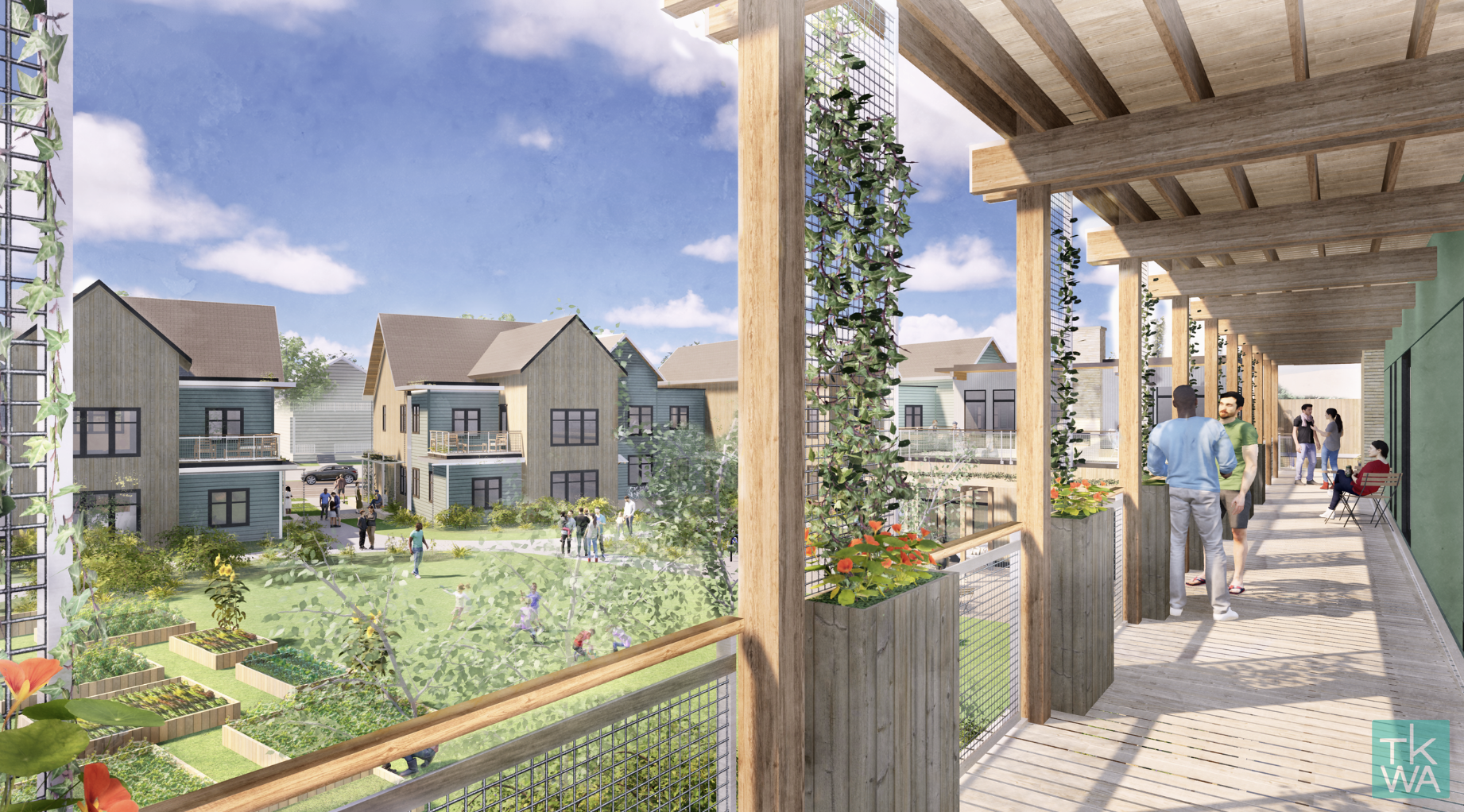
Architect rendering of its location along Humboldt Boulevard by Gordon Park in Riverwest, Milwaukee
A Community Shaped by its Residents
Cohousing communities are shaped by the people who live in them.
At River Trail Commons, residents participate in decision-making related to shared spaces and community life. This collaborative approach helps ensure the neighborhood reflects the values and priorities of its residents.
Cohousing governance is structured and designed to be efficient and respectful of people’s time. Participation helps make the community work, but it is not overwhelming or all-consuming.
See if this community in Riverwest fits your lifestyle.
Understanding how it works is just the first step.
Understanding how cohousing works is an important step in deciding whether this type of community is the right fit.
The next step is exploring whether this lifestyle aligns with what you’re looking for in a home, a neighborhood, and a long-term investment.